weblog
How to Start a Plastic Container Production Line: A Complete Guide


Setting up a blow molding machine is a multi-stage and engineering-driven process that requires close attention to technical details, proper system design, precise operator training, and regular maintenance. Utilizing technical expertise, selecting the right machine and raw materials, and preparing suitable production infrastructure are among the key factors for success in this field.
Given the continuous growth of the packaging market, investing in the setup of a blow molding machine is considered one of the profitable and sustainable opportunities in the manufacturing industry.
فهرست محتوایی مقاله
How to Start a Plastic Container Production Line: A Complete Guide
In today’s world, the packaging industry and the production of lightweight, hollow, and durable plastic containers are highly dependent on advanced technologies such as the blow molding machine. Thanks to their ability to produce complex shapes with thin and uniform walls, these machines are widely used across various industries, including food, pharmaceutical, cosmetic, chemical, and even automotive sectors.
Blow Molding Machine
A Blow Molding Machine is an industrial device that uses compressed air to form hollow plastic products from molten polymer materials. Products such as bottles, jerry cans, tanks, plastic balls, and packaging containers are all manufactured using this technology.
Today, several manufacturers in Iran are also producing blow molding machines, allowing buyers to source suitable equipment from domestic suppliers.
An Extrusion Blow Molding Machine is widely used for manufacturing hollow plastic products with consistent wall thickness and high production efficiency.
Types of Blow Molding Machines
Extrusion Blow Molding Machine
In this method, polymer materials are melted through an extruder screw and formed into a tube-like shape known as a parison, which is placed inside a mold. Compressed air is then injected, causing the material to expand and adhere to the mold walls, forming the final product.
Injection Blow Molding Machine
In this process, a preform is first manufactured using injection molding. The preform is then reheated, placed inside a mold, and expanded using compressed air to create the final container shape.
Injection Stretch Blow Molding Machine (ISBM)
In this model, the preform is mechanically stretched while compressed air is simultaneously injected, allowing the material to expand uniformly. This method is especially suitable for lightweight containers with thin yet strong walls, particularly PET bottles.
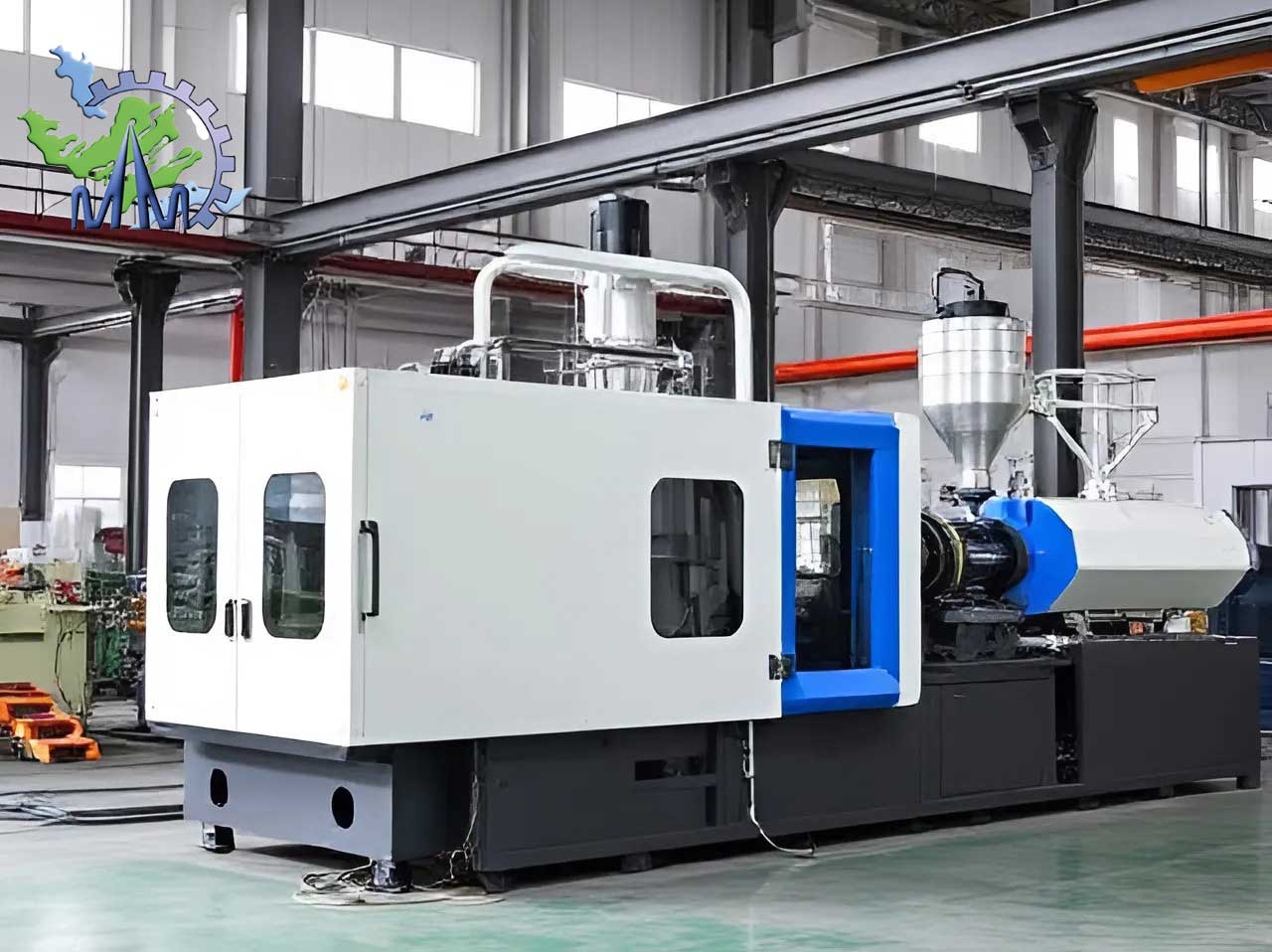
Blow Molding Production Process
In this section of the Blow Molding Machine Setup article, we examine the plastic blow molding production process, which is carried out step by step as follows:
-
Melting raw materials such as PET, HDPE, or PP at a controlled temperature
-
Producing a preform or parison from the molten material
-
Placing the preform inside a closed mold
-
Applying compressed air to force the material against the mold walls
-
Cooling the product using water or cold air and ejecting the final product
In all three types of blow molding machines, these core principles remain the same, with differences mainly occurring in the preform production method and blowing stage.
Complete Steps for Setting Up a Blow Molding Machine
Setting up a blow molding machine requires precise execution of the following steps:
Installation Site Preparation
-
Providing sufficient physical space with a solid floor capable of supporting vibration and heavy machine weight
-
Ensuring proper ventilation to prevent heat accumulation from heaters and compressors
-
Access to stable three-phase electricity, a compressed air supply system, and cooling water
Mechanical and Electrical Installation
-
Positioning the machine with precise leveling to prevent vibration
-
Connecting power supply, hydraulic system, pneumatic system, and control lines
-
Installing molds and performing accurate alignment between machine components
Calibration and Initial Testing
-
Testing heaters, sensors, and the air blowing system
-
Adjusting temperature settings for different machine zones (extruder, mold, nozzle)
-
Checking air pressure, airflow speed, and mold performance during initial trials
Operator Training and Preparation
-
Training operators to work with the HMI or control panel for parameter adjustments
-
Teaching safe mold replacement, emergency shutdown procedures, and basic maintenance
-
Training operators to identify defects and apply quick troubleshooting methods during production
Trial Run and Final Commissioning
-
Initial startup using actual production materials
-
Producing multiple samples for quality control, including leak testing, wall thickness, and uniformity checks
-
Eliminating potential issues and preparing the machine for mass production
Main Components of a Blow Molding Machine
Before setting up a blow molding machine, it is essential to understand each component individually and become familiar with its function and design system.
Extrusion or Injection System
This is the heart of the machine, responsible for melting, mixing, homogenizing, and injecting polymer materials. It includes:
-
Barrel and screw
-
Temperature-controlled heating elements across multiple zones
-
Hydraulic or electric drive motor
Molds
Molds are typically made of hardened steel or aluminum. Their precise design is crucial for achieving the desired shape, wall thickness, and efficient cooling. Molds may be single-cavity or multi-cavity, depending on production capacity requirements.
Air Blowing System
This system consists of an air compressor, filters, nozzles, and control valves. It delivers compressed air at controlled and uniform pressure into the preform to shape the final product.
Central Control System
The control system includes an industrial PLC with a touch-screen interface. Its functions include monitoring operations, data logging, adjusting time, temperature, and pressure settings, generating alarms, and automating machine performance.
Cooling System
This system includes chillers or cooling towers and is responsible for reducing the temperature of molds, heaters, and process-related components. The use of internal cooling channels within molds is a common and effective practice.
Key Points in Setting Up a Blow Molding Machine
To successfully set up a blow molding machine, observing several key considerations is essential:
Accurate Raw Material Selection
-
Choosing the appropriate grade of PET, PE, or PP based on the product type
-
Evaluating Melt Flow Index (MFI) and material viscosity
-
Ensuring materials are completely dry to prevent bubble formation
Optimal Technical Settings
-
Precise adjustment of temperature, pressure, and blowing time based on experience
-
Controlling mold positioning, cooling time, and injection rate
Process Quality Control
-
Continuous sampling throughout production shifts
-
Inspecting dimensions, appearance, leakage, and product weight
-
Using online quality control sensors in advanced industrial production lines
Regular Maintenance and Servicing
-
Implementing weekly, monthly, and annual maintenance schedules
-
Inspecting worn components, filters, nozzles, and bearings
-
Updating the central control software when necessary
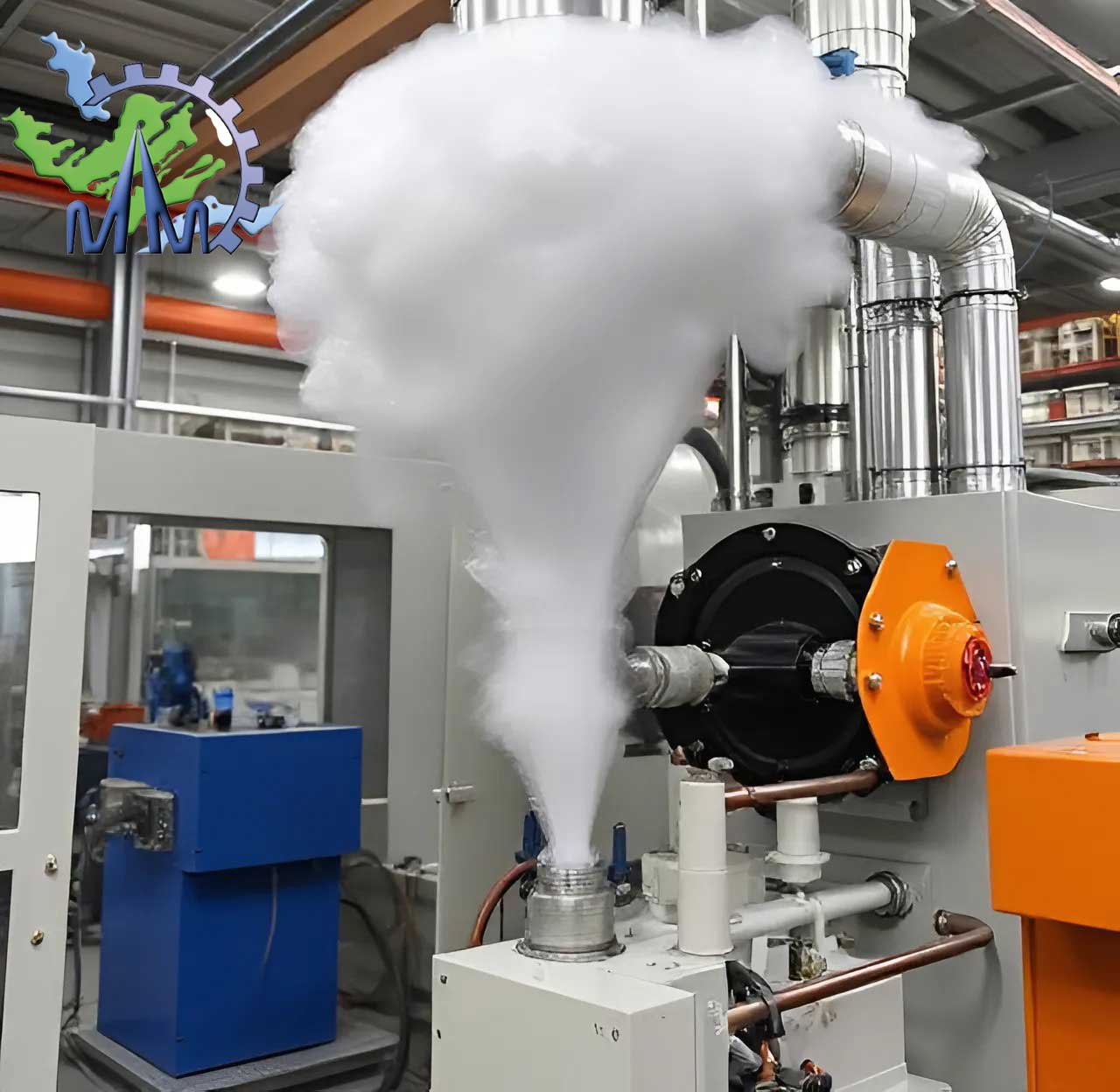
10 Key Tips to Extend the Lifespan of a Blow Molding Machine
After setting up a blow molding machine, proper maintenance is essential to maximize its service life. Below are 10 key tips that, when followed consistently, can significantly increase the durability and performance of your machine:
-
Check heater performance and air pressure daily before starting each shift.
-
Always dry and sieve raw materials before use.
-
Clean and lubricate molds regularly.
-
Avoid applying excessive pressure to the molds.
-
If any unusual noise is detected, stop the machine and perform a technical inspection immediately.
-
After every mold change, recheck mold alignment and positioning.
-
Monitor and adjust the temperature of each zone according to the machine manual.
-
At the end of each shift, clean the nozzle and mold surfaces thoroughly.
-
Record daily machine performance and operational reports.
-
Inspect and replace air and water filters on a regular schedule.
If you do not have sufficient time to review all the provided content, you may refer to the PDF version for a quicker overview.
Common Challenges in Setting Up a Blow Molding Machine
In this section of the Blow Molding Machine Setup guide, we review the most common challenges encountered in plastic production lines and provide practical solutions for each issue.
Issue: Bubble Formation or Cracks in Products
Solution: Precisely control raw material temperature, use fully dried materials, and adjust blowing pressure accurately.
Issue: Uneven Wall Thickness
Solution: Check airflow uniformity, adjust mold positioning, and replace the nozzle if necessary.
Issue: Material Sticking to the Mold
Solution: Apply anti-stick coatings or polish the mold surface to improve release.
Issue: Low Production Rate or Frequent Downtime
Solution: Upgrade the control system, repair or replace compressors, and use high-quality components.
Issue: High Energy Consumption
Solution: Use energy-efficient heaters, optimize the operating cycle, and implement heat recovery systems.
Cost of Setting Up a Blow Molding Machine
Estimating the cost of setting up a blow molding machine depends on several factors, each influencing the initial investment and ongoing operational expenses. These costs typically include the following:
Machine Purchase Cost
The price of a blow molding machine varies based on its type (extrusion, injection, or injection stretch blow molding), brand, production capacity, number of mold cavities, and level of automation in the control system.
Mold Costs
Molds are among the most expensive and specialized components of the machine. The cost of manufacturing simple molds typically starts from approximately 50 to 200 million IRR. Multi-cavity or complex molds can cost 500 million IRR or more, depending on design complexity.
Infrastructure Requirements
-
Industrial three-phase power supply with adequate capacity
-
High-pressure air compressors
-
Cooling systems (chillers or cooling towers)
-
Industrial flooring and proper ventilation
Workforce and Training
Operator training, hiring skilled technicians, and ongoing labor costs represent a significant portion of the initial investment.
Raw Materials and Production Startup
To begin production, purchasing raw materials such as PET, HDPE, or PP granules is essential. Initial material procurement, packaging, and quality control testing may cost between 50 and 150 million IRR, depending on production scale.
Frequently Asked Questions About Setting Up a Blow Molding Machine
1. How long does it take to fully set up a blow molding machine?
The setup time for a blow molding machine depends on the machine type and the available infrastructure at the installation site. However, in most cases, the complete setup process typically takes 2 to 5 days.
2. What documents are required to start production with a blow molding machine?
The required documents generally include an operation license, environmental permits, and health and safety approvals, especially for food-grade applications.
3. What factors affect the quality of the final product?
Key factors include temperature, air pressure, mold design, raw material quality, and the cooling process.
4. Is it possible to produce multiple types of products with one machine?
Yes, by changing the molds and adjusting technical parameters, a single blow molding machine can be used to manufacture a wide variety of plastic containers.
5. What training is essential for machine operators?
Essential training includes working with the control panel (HMI), troubleshooting common errors, safety procedures, routine maintenance, and proper mold setup and adjustment.
Final Thoughts
Proper and engineering-based setup of a blow molding machine not only ensures high-quality final products but also improves production efficiency, reduces energy consumption, and extends the overall lifespan of the equipment.