




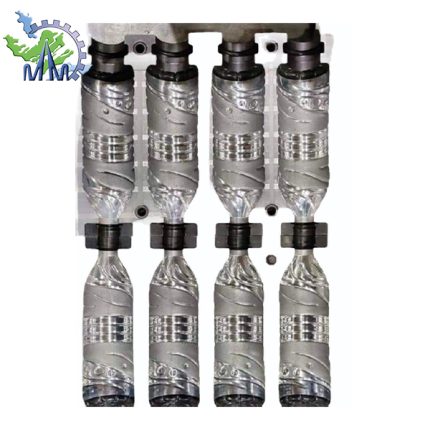
Discover high-quality mould design and manufacturing solutions engineered for precise, reliable plastic injection production. Our advanced mould technology ensures durability, accuracy, and optimal performance in every application.
Mould
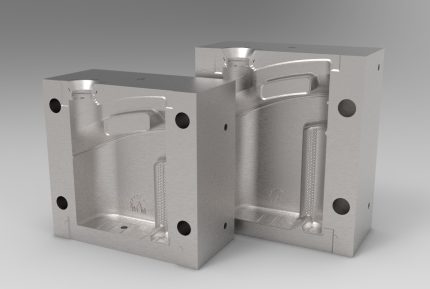
A mould is a precision-engineered tool used to shape molten plastic into a defined geometry during the injection molding process. It consists of a specially designed cavity that determines the final form, dimensions, surface quality, and structural integrity of the produced part. High-quality moulds are essential for achieving consistent production, minimizing defects, and ensuring that each component meets exact technical requirements. Factors such as material selection, cavity design, cooling channels, gating systems, and venting all play a crucial role in mould performance.
Modern moulds are manufactured using advanced CNC machining, EDM, and CAD/CAM technologies to achieve high accuracy and durability. These moulds withstand extreme temperatures and pressures during the injection process while maintaining dimensional stability over long production cycles. Proper mould design and fabrication not only enhance product quality but also improve efficiency, reduce production costs, and extend the lifespan of the mould in continuous industrial applications.
Plastic Mold Making (Injection Mold Manufacturing)
Plastic mold making is a manufacturing process in which plastic materials are shaped into desired forms by applying heat and pressure. This method is widely used to produce a variety of products such as containers, toys, automotive components, medical devices, and more.
Mold Making Process
Plastic mold making is one of the primary methods for producing plastic parts. In this process, molten plastic material is injected into a specially designed mold, and after cooling, the final part is formed with the required shape and dimensions. The mold making process includes several critical stages and factors that directly affect the quality and performance of the final product.
Plastic molding typically involves the following steps:
-
Material Selection: Choosing the right plastic material based on the desired properties, cost, and availability.
-
Mold Design: Creating a hollow metal cavity that determines the shape and dimensions of the final product.
-
Material Preparation: Melting, mixing, coloring, or adding additives to improve material performance and appearance.
-
Injection or Extrusion: Injecting or extruding the molten plastic into the mold cavity, where it fills the space completely and conforms to its shape.
-
Cooling & Solidification: Cooling the plastic inside the mold until it solidifies into a stable, final form.
-
Ejection: Removing the finished product from the mold for further processing or packaging.
Mold Design
In this stage, advanced computer-aided design (CAD) software is used to design the mold according to the properties of the selected plastic material and the specifications of the final product. The mold design must consider several technical aspects, including injection direction and speed, injection pressure and temperature, plastic shrinkage, gate location and quantity, venting channels, parting lines, cooling and heating systems, and the ejection system.
Mold Manufacturing
During mold manufacturing, CNC machining, milling, turning, grinding, and other precision machining processes are used to create the physical mold based on the design. Key considerations include selecting the proper mold material, achieving dimensional and surface accuracy, ensuring durability and hardness, and providing an efficient mold installation and replacement process on the injection machine.
Plastic Injection Molding
In this stage, raw plastic material (typically in pellet form) enters the injection machine’s barrel. As it moves forward through the screw, it melts and transforms into a homogeneous plastic melt. The molten material is then injected into the mold. After the mold cavity is fully packed, a holding pressure is applied to ensure complete filling and prevent defects such as voids or shrinkage. The part is then cooled inside the mold and finally ejected using the mold’s ejection system.